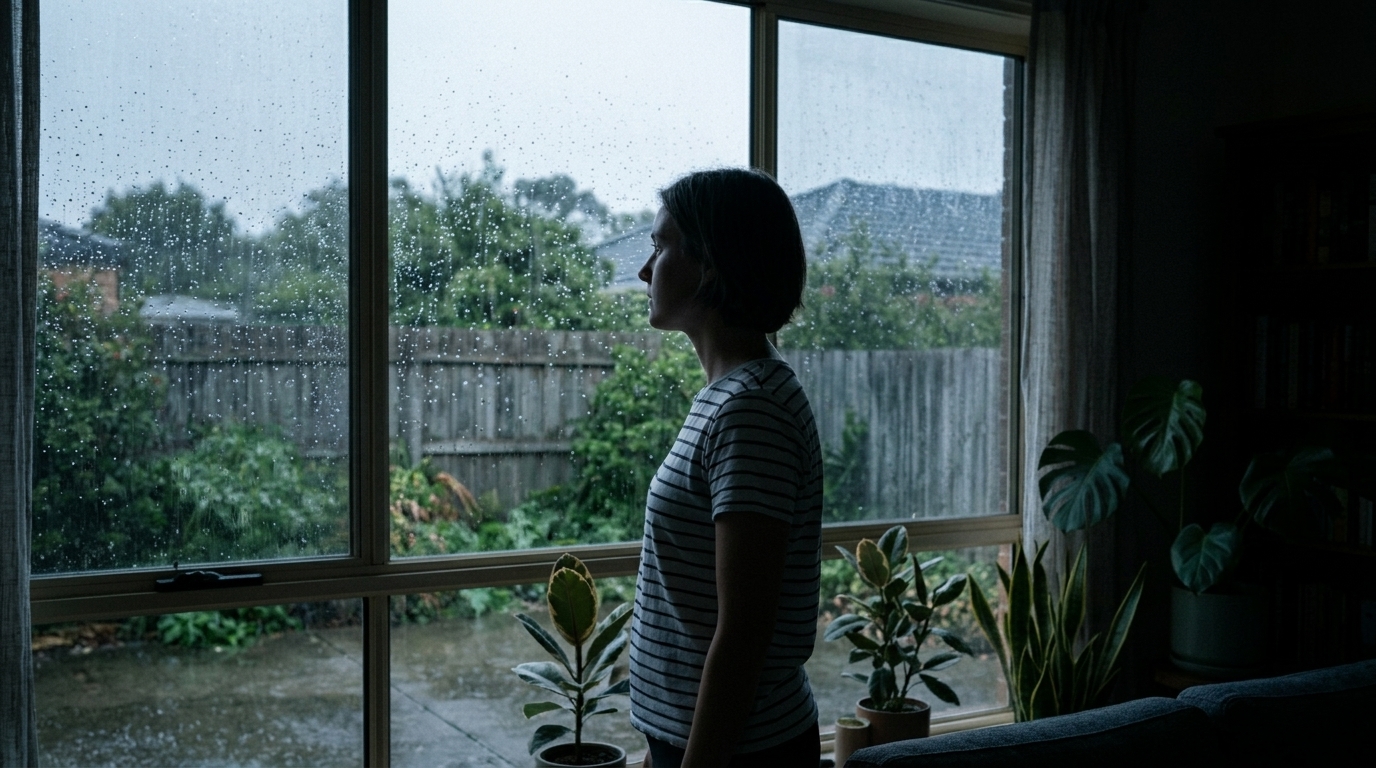
Born with Moebius Syndrome, Christina lives with facial paralysis and is often misjudged by others. Through writing, she found a voice free of speech struggles and uses her blog to build awareness.
My name’s Christina and I have a form of facial paralysis called Moebius Syndrome. It is a rare neurological condition present from birth, caused by the absence or underdevelopment of the sixth and seventh cranial nerves. The sixth nerve directs lateral eye movements and the seventh controls facial expressions. Exactly why this happens remains unknown.
This condition is so rare that doctors initially suspected I had facial dysmorphism, because my newborn face didn’t look ‘normal’. It wasn’t until I was about a month and a half old that I was diagnosed with Moebius Syndrome.
The condition exists on a spectrum; some people have milder symptoms and fewer visible effects, while others experience more severe physical and facial differences. In my case, I can’t close my lips, move my eyes laterally, smile, frown or blink normally.
Unfortunately, when our faces don’t show the expressions people expect, they often jump to the wrong conclusions. We can be mistaken for being unfriendly, bored, uninterested or detached or, worst of all, for having an intellectual disability.
But those who know me well learn to read my emotions differently. Because I can’t express feelings like joy or stress through facial expressions, they recognise my emotions through my body language and tone of voice. As a kid, whenever I felt overwhelmed or excited, I would stretch and stiffen my arms down by my sides like the wings of a fighter jet. I’d repeatedly open and close my hands at top speed. That’s where I got the nickname ‘F-17’.
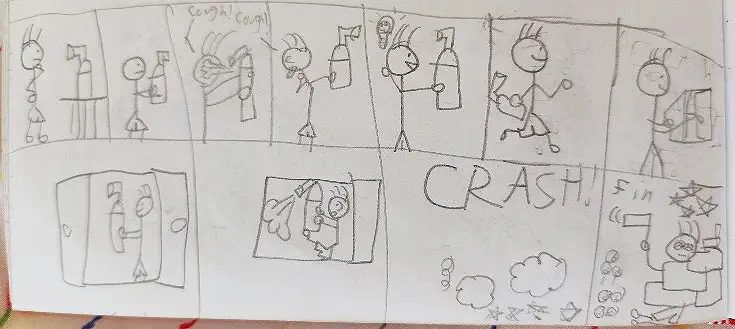
Although my face is impassive, I’ve always had a vivid imagination. Daydreaming was a huge part of my life, and I turned those thoughts into sketches. As a child, I created my own stick-figure comics and came up with dramatic love stories filled with cheating, crime and unexpected twists. Around the age of seven or eight, I turned short stories into comic strips. I spent hours drawing and filling entire sketchbooks in just a few days, which meant my parents begrudgingly had to buy me a new one every week.
As I got older, my imagination grew so vivid and intense that it became overwhelming. I realised I had to put my ideas on paper and bring them to life as written stories, no matter how long or short they were.
And that’s where it all began, when I discovered my passion for writing.
Navigating misconceptions and struggles
Growing up with Moebius Syndrome wasn’t easy, and it still isn’t as an adult. For many years, I struggled to accept that I had Moebius Syndrome and was convinced it was ruining my life. People often avoided eye contact with me. Whether it was family friends, clerks, doctors or strangers, they would look at someone else, usually my mum, even when the conversation was directed at me. Sadly, this still happens a lot today.
From time to time, I get unpleasant comments, especially from men. The most common question is ‘What’s wrong with your face?’ Other times, I face cruel remarks like ‘You’re uglier than an ogre’ or ‘You’re uglier than underneath a car.’ Statements like those cut deep and reinforce every insecurity I carry about my face. I even get bizarre questions like ‘Are you taking pills or medicine?’ I’ve learned to brush them off and laugh at how ridiculous they sound, but those comments still stick in my head.
Because of my facial paralysis, I cannot pronounce the sounds M, B and P clearly, as they involve both lips. It’s always been a struggle. When others don’t understand what I am trying to say, I have to repeat it. Because there’s a high chance they won’t understand, people often pretend they understand me when they don’t. I’ve learned to avoid words with bilabial consonants and use synonyms, especially with strangers, to avoid confusion and embarrassing moments.
However, when I sit down to write, none of that matters.
The blank page doesn’t care if I can’t pronounce words clearly, and it doesn’t silently judge me. Writing gives me control over my own voice and how I want to present myself.
Finding my voice through writing
Since I can’t show expressions on my face, I have to express myself differently, through writing. Eventually, I got tired of drawing, but that didn’t prevent my imagination from expanding. I still remember the day I decided to try writing a story on the computer; I was thriving while typing the words into a blank document and enjoyed every moment. Everyone loved what I wrote and encouraged me to keep going, telling me I had a natural talent for it. Since then, I’ve kept writing. While my main focus is creating posts for my personal blog about Moebius Syndrome, my dream is to become a published author one day.
In everyday life, avoiding words with M, B and P requires me to build a constant mental dictionary of synonyms. What started as a speech defense mechanism in the real world became my greatest strength on the page. Writing gives me the time to think without pressure. I don’t have to worry about getting nervous, stumbling over my words or repeating myself when misheard.
There’s a huge difference between the real me in daily life and the real me when writing:
- The real me in daily life: people jump to the wrong conclusions when I can’t return their smile, so I can never really be 100 per cent myself.
- The real me in writing: I can be unapologetically myself without worrying about speech struggles. This is where people truly get to know me.
Building confidence with writing courses
When I discovered UK Writers’ College in 2018, I was thrilled because it gave me a chance to improve my writing. Over the years, I completed several courses: Basic and Advanced Creative Writing, Copywriting, Copy-editing and Proofreading, Scriptwriting and more recently, Write with AI.
I learned a lot from all of them, but the course that stuck with me the most was the last one, Write with AI. The tutor, Nichola, encouraged me to write about things I thought I’d never dare to address because they felt scary or taboo. One of those topics was Moebius Syndrome, something I’d never written about before.
Thanks to Nichola, I stepped out of my comfort zone and wrote about what it is like to live with my facial paralysis and the struggles that come with it.
Being challenged like that changed everything for me. Today, I use my personal blog to spread awareness about Moebius Syndrome and my experience with it, while also sharing my writing in general. My goal is to break down stereotypes and show the world that people with Moebius Syndrome have emotions and are fully functional.
My facial paralysis may shape how the world first sees me, but writing lets them meet the person beneath it. On the page, my face is no longer the story; my voice is finally heard.
About the Author
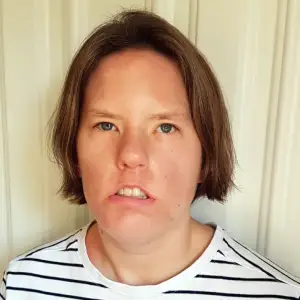
Christina has loved storytelling since childhood, when she filled sketchbooks with comics before turning to written stories. She discovered UK Writers’ College in 2018 and has completed courses in Creative Writing, Copywriting, Proofreading, Copy-editing, Scriptwriting and Write with AI. Christina writes scripts for videos for her YouTube channel, as well as articles for a personal blog that raises awareness of Moebius Syndrome. Her dream is to become a published author.