As print media declines and digital demands grow, Sunday Mirror deputy news editor Keir Mudie says the future belongs to journalists who can adapt without losing sight of the human instincts at the heart of the job.
British journalism has spent the past decade learning to live with permanent disruption: shrinking print circulations, smaller newsrooms and audiences that expect stories to arrive instantly, visually and across multiple platforms. Few people are better placed to explain what that means for young reporters than Keir Mudie, deputy news editor of the Sunday Mirror and Sunday People.
For anyone considering journalism as a career in the UK, the central question is no longer simply whether newsroom jobs still exist, but what kind of journalist can thrive now.

How digital disruption changed the newsroom
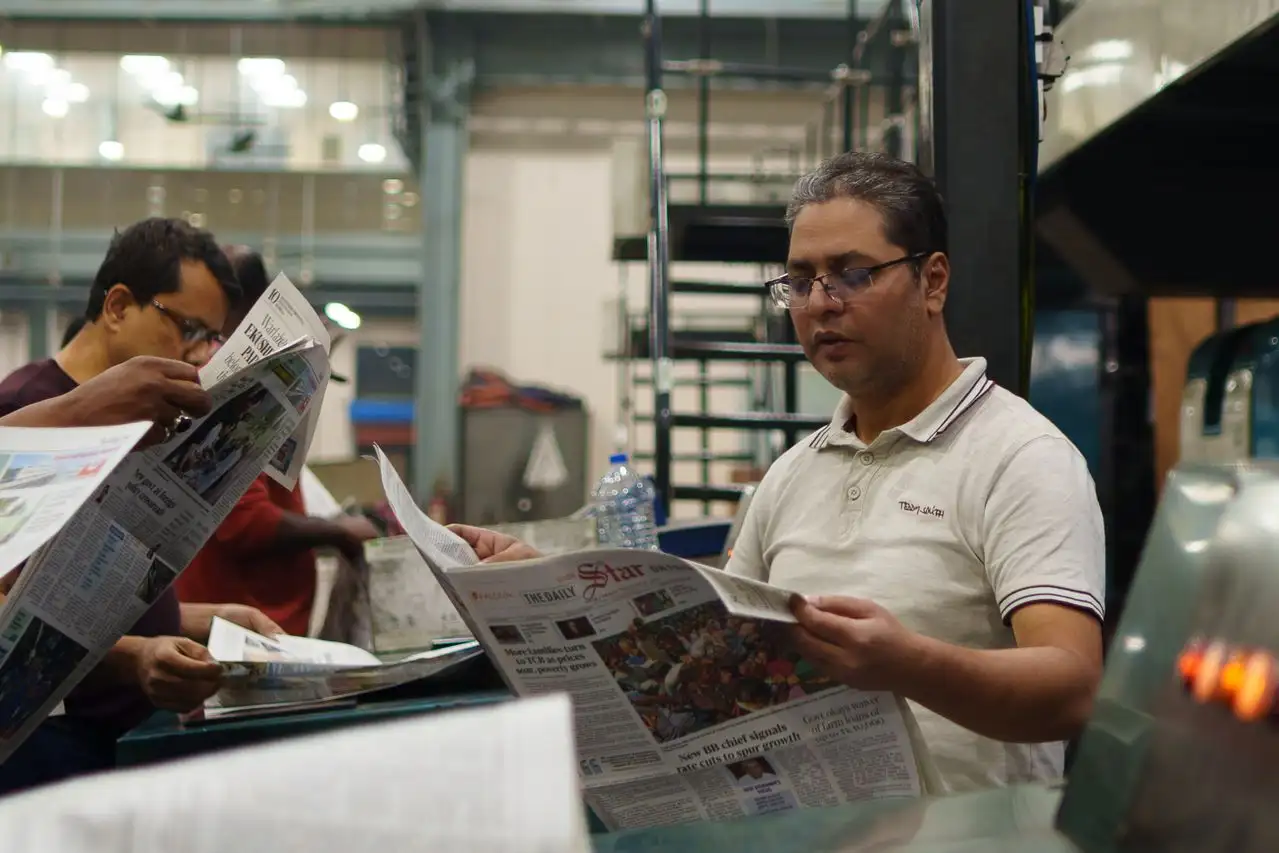
Asked how much newsrooms have changed, Mudie is unequivocal: ‘Radically, and they are still changing all the time. The most obvious difference is that there are now fewer staff working in print than in digital, as organisations increasingly shift their focus online.
‘For reporters, this has meant broadening their skill sets. There is now an emphasis on video, podcasting, audio, live blogs and all the rest of it.
‘I think people were resistant to the change at first. Those who grew up with print and have worked in it for a long time are fiercely protective of it. However, I think that attitude has softened.
‘There is a part of me that feels sad when I think about old newsrooms, with phones ringing all the time, books and papers everywhere and the general chaos. I miss that.’
The scale of the shift away from print can be seen in national newspaper circulation figures:
| Title | 2014 circulation | 2024 circulation | % reduction |
| The Sun | 2,213,659 | 846,916 | 61.7% |
| Daily Mail | 1,780,565 | 688,972 | 61.3% |
| Daily Mirror | 992,256 | 223,177 | 77.5% |
| Daily Telegraph | 544,546 | 174,293 | 68.0% |
| Daily Express | 500,473 | 139,269 | 72.2% |
| Daily Star | 489,067 | 124,896 | 74.5% |
| The Times | 384,304 | 281,370 | 26.8% |
| i (The i Paper) | 298,266 | 125,242 | 58.0% |
| Financial Times | 234,193 | 109,379 | 53.3% |
| The Guardian | 207,958 | 79,906 | 61.6% |
Note: These figures are indicative estimates compiled from recent industry data, reported averages and market projections.
Sources: Audit Bureau of Circulations (ABC), January 2014 circulation figures, as reported by The Guardian; Media Reform Coalition, Who Owns the UK Media? 2025, Table 7, Percentage reductions calculated from the figures shown.
Why journalism is still worth choosing
Asked whether he would encourage young people to pursue journalism, Mudie does not hesitate.
‘Absolutely. The only thing I would say is that you should go into it with your eyes open. The best piece of advice I received, and I’ll clean it up a little, came from an old news editor of mine, who said: “The hours are terrible, the money is terrible and the stress will kill you. But it’s fun, and you should only stop doing it when it stops being fun.”’
How young reporters can get noticed
Mudie says aspiring journalists should focus on becoming findable by publishing regularly, reading widely and showing that they understand how stories work.
‘There are more routes in than there used to be. Start writing as soon as possible, whether for a student newspaper or another publication. Every bit of experience you gain will count for something later.
‘I hate to say it, but having a personal brand is important too. It could be a Substack newsletter, a blog or a YouTube channel, whatever format you choose. I don’t do any of that, and I really should.
‘In the meantime, read as many different publications as you possibly can. Work out which stories belong where, how a story is constructed and who is doing what. Above all, keep up with the news.’

What journalists earn
The career picture is broader than the circulation figures suggest. Journalism still opens doors, particularly for reporters who develop specialist knowledge, digital fluency and transferable communication skills.
| Career route | Approx. UK annual salary | What it tells us |
| Newsroom journalist | £36,054 average | Indeed’s UK journalist average, based on 719 reported salaries. |
| Regional newsroom reporter | £22,000 to £30,000 | Entry-level and regional journalism remain relatively poorly paid. |
| National/London staff reporter | £28,000 to £42,000 | Larger national organisations generally pay more. |
| Digital journalist / producer | £25,000 to £45,000 | Digital does not automatically mean higher pay; experience and employer matter enormously. |
| B2B / specialist journalism | £28,000 to £50,000 | Specialist knowledge can command a premium, particularly as experience increases. |
| Corporate communications | £46,476 average for Communications Manager | One of the clearest potential salary jumps for journalists moving into business. |
| PR/Communications Manager | £39,250 to £61,000; £51,500 midpoint | Robert Half’s 2026 benchmark shows substantially higher mid-career earning potential. |
| Podcasting | Highly variable | Difficult to assign a meaningful ‘journalist salary’: roles range from employed audio producers to freelancers and independent creators. |
Note: These figures are indicative and are based on reported salaries, recruitment benchmarks and industry estimates available at the time of publication.
Sources: UK journalism salary figures are drawn primarily from the National Council for the Training of Journalists’ (NCTJ) Journalists at Work 2024 research. Newsroom journalist and corporate communications salary data are based on Indeed UK’s journalist and Communications Manager salary figures, while PR and communications management figures come from Robert Half’s 2026 UK Salary Guide. Salary figures should be treated as indicative, as earnings vary according to experience, seniority, location, specialisation and employer.
For a detailed overview of the responsibilities, transferable skills and earning potential associated with corporate communications and public relations, read the Prospects public relations officer career profile.
The qualities that matter most
Mudie says, ‘Honestly, I would place writing lower down the list than many people might expect. Copy can always be improved by subeditors, the news desk or colleagues. It is extremely rare for a story to go through unchanged the first time.
‘Above all, you must be interested in other people and care about them.’
~ Keir Mudie
‘In fact, it can be more difficult to work with people who believe they can already write perfectly. They often end up using words and phrases that have no place in a news story.’
Mudie says that you can spot who will become a standout journalist fairly quickly. ‘Confidence, determination, a willingness to get on with things and an ability to work well with people are all important. A good telephone manner used to be vital, although I don’t think anyone makes calls anymore.
‘Above all, you must be interested in other people and care about them. Being on time is helpful too.’
Where journalism skills can lead next
Mudie says the skills developed in journalism can carry into a wide range of digital and corporate roles.
‘Those skills include interviewing, making complex information accessible, working under pressure, empathy and sensitivity.
‘Many of my former colleagues have found good homes in the digital world, including business-to-business communications, crisis management and similar fields. They still miss the real thing, though.’
The newsroom that Mudie remembers, with its ringing phones, papers piled high and the productive chaos of print, may be fading. But the work itself is not.
Journalism will keep changing shape, but its value still depends on people who are curious, persistent and alert to other people’s lives. For the next generation, that may be the real skill: not simply to master new tools, but to remember what makes a story worth telling.