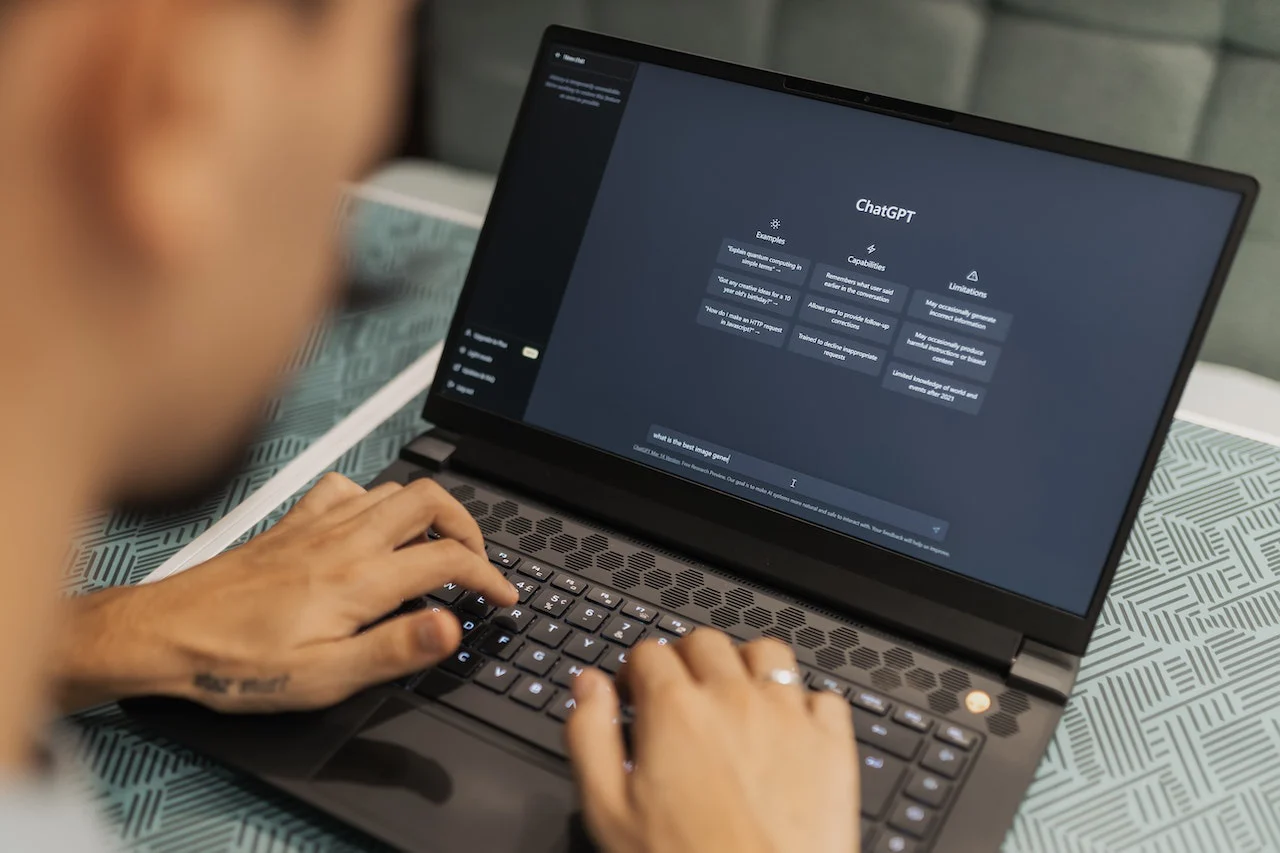
Several UK agencies now refuse submissions touched by AI at any stage, including editing. A major publisher already pulled a novel over suspected AI use: Hachette cancelled the US edition of Shy Girl and discontinued the UK edition in March 2026. And Amazon still allows AI-generated books in its self-publishing programme, but requires you to disclose them.
The useful question is therefore not ‘AI or no AI’ but ‘which use, for which reader’. What follows separates what is banned from what is merely discouraged and what is openly allowed.
The deeper problem: trust and authorship
Fiction, poetry and the short story run on an unwritten promise that the words came from a human mind, and taking credit for text a machine produced breaks that promise.
Publishers say as much. When Hachette halted Shy Girl, it said it remains ‘committed to protecting original creative expression and storytelling’. Readers appear to agree. A BookInsights.ai survey of 5,025 US book buyers, published in October 2026, reported that 85% think books should disclose AI use and only 22% are comfortable with AI at any stage of writing. That is a US survey of stated attitudes, not sales data, but it points the same way as the rules in the sections below.
Is it plagiarism? In the sense that matters to readers, often yes. Universities define plagiarism as presenting someone else’s work as your own, and Aberystwyth University now lists ‘presenting work generated by AI as if it were your own’ as an example. The argument carries over to a novelist: if you put your name on a chapter you did not write, you are claiming credit that belongs to no one.
The precise answer has a catch. A machine is not a person with a claim on its output, and using AI is not automatically plagiarism, because the problem arises when AI content is presented as original without acknowledgement. The cleaner term for a writer is misrepresented authorship, and disclosure is the dividing line between honest and dishonest use.
Amazon draws the same line: it asks you to declare AI-generated content but not when you used AI to edit, refine or error-check your own work.
The law points the same way. In the United States, the Copyright Office concluded in January 2025 that AI-generated material is not copyrightable, including AI-generated elements inside an otherwise human-authored work. It also found that even a detailed prompt does not give you ownership of the output. Human selection, arrangement or modification can still earn protection, and a work that is partly human and partly AI may be protected as a whole if the human authorship is sufficient.
UK law is in flux. Section 9(3) of the Copyright, Designs and Patents Act 1988 treats the author of a computer-generated work as the person who made the arrangements necessary for its creation. The government’s March 2026 report recommends removing that protection for works with no human author, while keeping it for AI-assisted works where a human makes creative choices. The report is non-binding and no legislation has been introduced, and the government has said it will monitor before acting.
The practical reading is clear enough: text that is mostly machine-made may be hard to own, and ownership is what you sell to a publisher. That is why agencies such as Greyhound Literary warn that contracts often carry an originality warranty.
Three questions to ask yourself:
- Did I make the creative choices in this text?
- Could I sign an originality warranty without hesitation?
- Would a reader feel misled if they saw how it was made?
If the answer to any of them is no, the work is not yours to claim, and the rules that follow explain how the industry enforces that.
Why to avoid AI in fiction
Beyond trust and ownership, the practical case against is strong: it can cost you representation, a contract or a prize, and it may not even make the writing better.
It can flatten your voice. Agents at Greene & Heaton warn that even apparently harmless tools can ‘really flatten your writing’, and say they can often spot widespread AI use. David Higham Associates makes a similar claim about covering letters, saying it can easily spot AI-assisted ones.
It can put your contract at risk. Greyhound Literary notes that publishing contracts often carry an originality warranty, so a writer who cannot promise the text is their own may endanger a deal.
Suspicion alone can sink a book. Mia Ballard denies using AI for Shy Girl and blames an acquaintance she hired to edit the self-published version. Hachette still pulled the novel, and it was removed from retailers including Amazon. The case shows that a writer can be held responsible for AI use they did not personally carry out.
Accusations are easy to make and hard to settle. Winners of the 2026 Commonwealth Short Story Prize faced AI allegations, and the Foundation cleared them after a month-long review. The Foundation had used no AI checkers on the unpublished entries, which illustrates how little certainty anyone has.
What UK publishers and agencies state upfront
Publishers speak in principles, while agencies set hard rules.
Publishers. Penguin Random House UK says in its copyright and AI consultation response: ‘We do not see any technology as a substitute for human imagination.’ The same statement, dated February 2025, adds that it will use generative AI selectively and does not address editing. Faber is firmer in practice: its policy bars freelancers from copying author material into AI tools for any purpose. On the commercial side, the Bookseller reported that over 250 UK publishers opted in to a collective AI licensing scheme in June 2026, and that the Publishers Association launched an AI Taskforce in July. Publishers are, in other words, negotiating over AI as well as policing it.
Agencies. The wording is blunt:
- DHH Literary Agency cannot accept submissions ‘generated, written, co-written or edited using artificial intelligence technology’, and that includes the covering letter and synopsis.
- Greyhound Literary asks that all work be ‘neither generated by nor co-written with AI’, and wants any use of AI tools explained.
- David Higham Associates does not wish to consider submissions written with generative AI tools and requires disclosure of any use.
- Greene & Heaton says AI at the originating, writing or editing stage will not be accepted, including in the cover letter, synopsis and proposal.
The pressure is real on both sides of the desk. The Bookseller’s advice for emerging authors in February 2026 reported agents urging writers to avoid AI, and the New Statesman reported in April that agents had seen a rise in AI-authored submissions.
Authors’ bodies. The Society of Authors launched its ‘Human Authored’ scheme in March 2026. Authors sign a declaration that the work was not produced with a generative AI model, though assistive uses such as spelling and grammar checks are permitted.
Does the same apply to editing?
For many agencies, yes. The wording above already covers editing, and it is not an accident.
Mushens Entertainment will not consider work originated, written or edited using artificial intelligence, including query letters. Georgina Capel Associates uses the same ‘originated, written or edited’ formula and applies it to the cover letter, synopsis, proposal and manuscript. DHH extends its ban to work edited with AI.
The line between editing and writing is also where the risk sits. Shy Girl shows how a hired editor’s alleged use of AI can become the author’s problem. Faber’s freelancer policy shows that publishers are tightening the other end of the chain, by barring outside editors from putting author material into AI. A separate report, relayed by a publishing course site, describes editors uploading confidential manuscripts to ChatGPT.
Not everyone draws the line in the same place:
- The Society of Authors’ scheme permits spelling and grammar checks.
- The Bridport Prize bars entries rewritten or paraphrased with AI, and its only allowance is light checking.
- The Bournemouth Writing Prize allows AI only for copyediting.
- Amazon treats using AI to edit, refine or error-check your own text as AI-assisted, which need not be disclosed.
The practical rule is simple: if the destination is a UK agent, treat any AI editing as banned until the submission page says otherwise.
Amazon’s latest rules for self-publishing
Amazon allows AI-generated books through Kindle Direct Publishing (KDP), but you must tell it when you use AI to generate content, and you stay responsible for what the tool produces.
What you must disclose. Amazon says: ‘We require you to inform us of AI-generated content’. It covers text, images (including covers and interior art) and translations, whenever you publish a new book or republish an existing one.
What you need not disclose. If you created the work yourself and used AI to refine, error-check or brainstorm, it counts as AI-assisted and need not be reported.
The 2026 catch. According to the UK guide, heavy editing does not turn AI-generated text into AI-assisted text. Disclosure is made by a checkbox during book setup, and declared AI content can still be published if it meets the other guidelines.
Consequences. Titles can be removed for undisclosed AI-generated content, and Amazon said that it would reject or remove AI content that creates a disappointing customer experience. Amazon also says you must verify that AI content respects intellectual property rights. The rules began after fake titles appeared under author Jane Friedman’s name in 2023.
These rules govern Amazon only. They say nothing about what a UK agent, publisher or prize will accept.
Short stories and poetry
Short fiction and poetry face the strictest rules of all, because competitions and magazines have no agent or editor to vouch for the writer.
- The Writers’ College Short Story Competition has an outright ban on the use of AI, and disqualifies writers whose work shows any traces of AI phrases or structure.
- The Bridport Prize says entries must not be written, rewritten, paraphrased or creatively developed using generative AI tools.
- The London Magazine states that AI-generated or partially AI-generated stories will not be accepted.
- The Bournemouth Writing Prize permits AI only for copy-editing.
- Duotrope lists the Poetry Business 40th Anniversary competition and the Café Writers Poetry Competition as accepting human-created work only.
The Commonwealth Short Story Prize shows why these rules are tightening. Its stories were published by Granta in May 2026 under rules that made no mention of AI. After the public allegations of AI use, the Foundation postponed the 2027 prize to January 2027 for a rules review.
For poets, the argument against AI use is also artistic. A poem lives or dies on the specific, odd choice, and the agents’ complaint about flattening applies with most force to the shortest forms. That is an opinion, not a finding, but it fits Greene & Heaton’s warning that AI editing tools can smooth writing into a generic sameness that may be easy to read, but provides no emotional payoff.
A balanced verdict and a checklist
The case for AI is complex and evolving. Amazon explicitly allows AI-assisted work without disclosure. The Society of Authors’ scheme permits assistive uses such as spelling and grammar checks, and Penguin Random House UK itself says it will use generative AI selectively. Even the writers’ lobby is divided: the Society of Authors withdrew from a global ethical AI charter within two weeks of launch after member backlash.
The conclusion, right now, is this: if you want a UK agent, a traditional publisher or a literary prize, do not use generative AI to draft, rewrite or edit anything you submit. Low-stakes uses such as spell-checking are widely tolerated, but each destination sets its own line.
Before you submit or publish:
- Read the specific submission page. Rules differ even between agencies that look alike, as Higham and Greyhound show, both of which ask for disclosure.
- Tell freelance editors and proofreaders in writing that you expect no AI use, given the Shy Girl editor dispute.
- Never paste a manuscript into a consumer AI tool without checking your contract, since Faber bars even its freelancers from doing so.
- Keep dated drafts, because accusations such as the Commonwealth Prize case were settled by review, not by software.
- On KDP, tick the AI-generated box whenever the text, images or translation were machine-made.
Please note: this article was 80% AI-generated and proofread by a human.